Home / Products / Pipe Lagging
Insulation

PipeLagging

Moulded EPS pipe insulation for HVAC and process pipework.

Kit queued

Pipe Lagging
Technical documentation

The Pipe Lagging kit

Brochure, design guide, engineering specification, CAD details and an interactive calculator.

PDF
Product brochureIn preparation.
Coming soon
PDF
Technical design guideFull design guidance, worked examples, standards references.
Download
PDF
Engineering specificationClause-referenced specification text for your tender documents.
Download
DWG
CAD detailsIn preparation.
Coming soon
APP
Interactive calculatorIn preparation.
Coming soon
At a glance

Key specifications

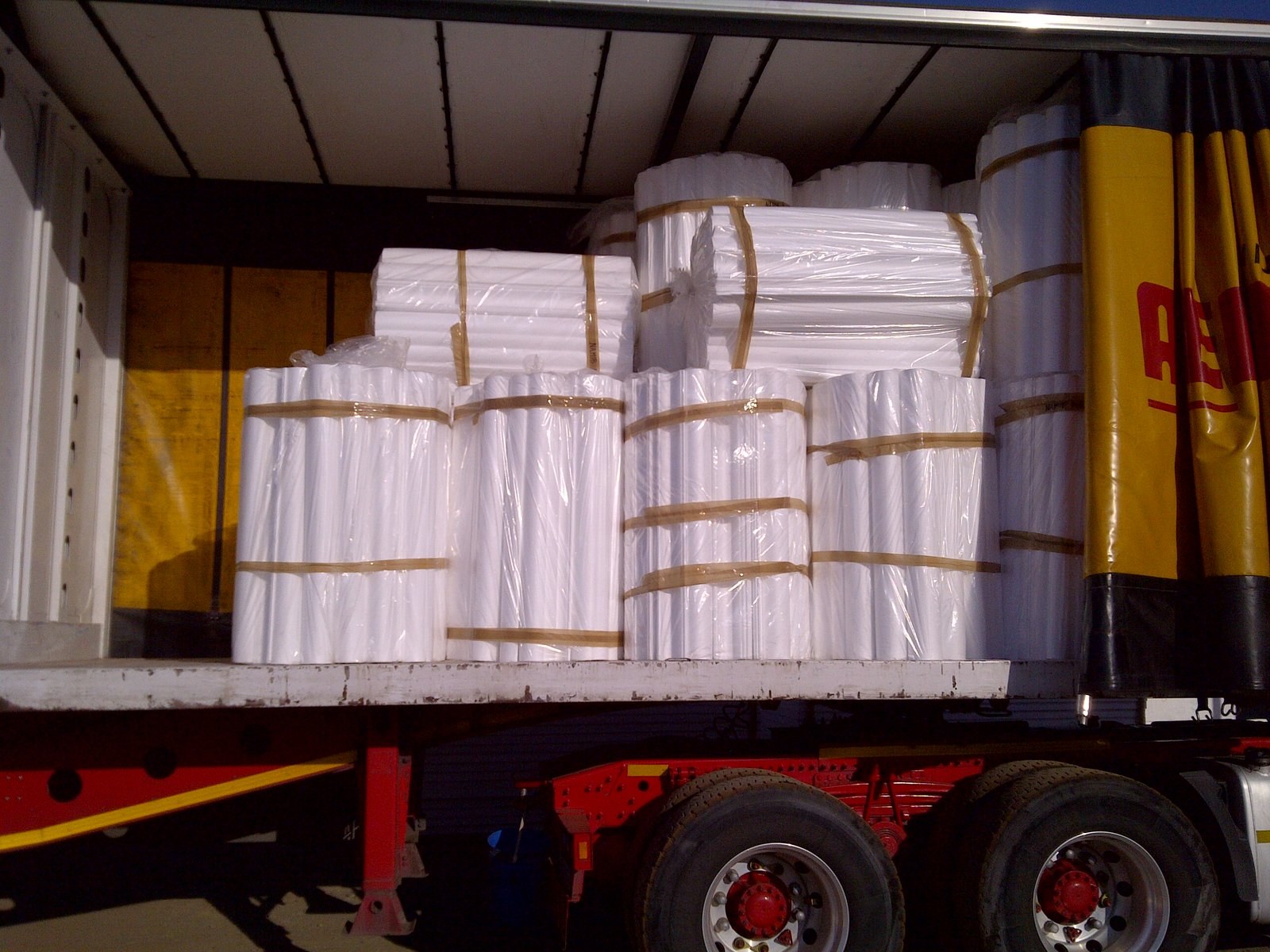
Technopol Pipe Lagging is a made-to-order moulded EPS pipe insulation supplied as pre-cut split half-shells that lock over the pipe, cut to the client's bore, wall thickness and length, and supplied bare (without cover or vapour barrier).

PropertyValueStandard
Material / coreExpanded polystyrene (EPS); mineral / stone wool on request
Form / build-upPre-cut moulded split sections (2- or 3-piece half-shells) that lock over the pipe; supplied bare, without cover or vapour barrier; cut to client's bore / wall / length
EPS density grades offeredStandard Grade/16DV, 20DV, 24DV, 32DV (nominal 16–32) kg/m³
Pipe nominal-bore range15NB–650NB (plus 290ID) NB
Insulation wall thickness20, 25, 30, 35, 40, 50, 70, 75, 80, 90, 100, 110, 130, 150 mm
Standard supply length1220 (1.22 m); shorter 610–1220 mm sections invoiced at 1220 mm price mm

EPS density grades are grade-dependent (expressed as DV = density value); the price list prices nominal densities 16, 24 and 32 kg/m³ with 20DV taken as the average of 16DV and 24DV. The mineral/stone-wool variant has no published density, sizes or spec in the corpus. No thermal conductivity (λ), R/U-value, compressive strength, reaction-to-fire class, fire-resistance rating (REI) or SANS/Agrément reference is published by Technopol for this product; it is a standard, non-proprietary industry item and none of these were found in any primary source. Product is supplied bare — the +140 °C service limit and any fire figures in the general brochure belong to the separate PIR32/PIC32 rigid-shell line, not to EPS pipe lagging.

Values from Technopol technical documentation. Confirm the exact figures for your specification with Technopol.

Applications

Where this product is used

The same product does a different job in each of these assemblies — each page states the target, the clause and the limits.

Cold Store & Refrigerated BuildingsAgricultural & Poultry Housing

Every number, its source

Performance data & provenance

Each figure is labelled with how we know it — a named in-validity test, a supplier value, an in-house calculation, or a test whose validity has expired.

PropertyValueStandardSource reportStatus
EPS density grades offered16–32 kg/m³Provisional
Pipe nominal-bore range15NB–650NB NBProvisional
Insulation wall thickness20–150 mmProvisional
Reaction to fireNone published for EPS pipe laggingProvisional

Labels are defined on our data promise; every source report is on the test-report register.

The limits

Where not to use this

A material specified for the wrong job fails you, then us. We would rather lose the order.

Steam lines, hot-water flow, boiler and process pipework, or any line running above roughly 70–80 °C.
EPS softens and creeps at sustained service temperatures above about 70–80 °C — it shrinks off the pipe, gaps open at the joints and the section collapses; it is also combustible, which is unacceptable against a hot line.
→ Mineral/stone wool pipe sections (Technopol supplies these on request) or calcium silicate for high-temperature duty, with the appropriate metal cladding.
Chilled-water, glycol or refrigerant lines running below dew point, specified as supplied.
Technopol pipe lagging is supplied BARE — no cover and no vapour barrier (PROVISIONAL) — so on a below-dew-point line water vapour drives straight into the joints, condenses, ices, and destroys both the insulation and the pipe beneath it through under-insulation corrosion.
→ Closed-cell elastomeric (Armaflex-type) sections for chilled lines, or keep the EPS shells only if the mechanical engineer designs and inspects a fully sealed vapour barrier and cladding over them.
Outdoor pipe racks in full sun, and any plant where fuels, solvents or aggressive cleaning chemicals can run down onto the lagging.
Prolonged UV degrades EPS and hydrocarbons and aromatic solvents dissolve it — a bare EPS shell outdoors on a solvent-handling plant has a short and unpredictable life.
→ Metal or foil cladding over the section (and re-check the specification), or stone wool with sheet-metal cladding for exposed and chemically-loaded environments.
Where it has been used

Project references

No project on the public register is tagged to this application yet. Ask us for references — we will send the ones that match your building type.

Ready to specify?

Send us the drawings. We will size it, detail it and quote it.

Request a spec or quote

Technical resource

Who should we send this to?

We release technical documentation to named engineers and specifiers so we can support you properly on the project. One entry unlocks everything.

We will not share your details. POPIA compliant.